
Keep a history, not a prescribed menu
The aim is to be able to look back at a particular meal. A short entry helps when another parent asks what was offered or you want to discuss an observation with your child’s clinician. You do not have to describe every spoonful. A diary does not set portions, diagnose a condition or replace an individual feeding plan.
When is it time for first foods?
CDC advises starting at about 6 months when developmentally ready, including head control and sitting independently or with support.
NHS guidance describes solid foods as complementary to breast milk or infant formula. Discuss readiness questions with your child’s clinician. CDC: when and how to introduce solids NHS: your baby’s first solid foods
What is worth recording?
Choose a few details that will still make sense a week later. For mixed or packaged foods, name the ingredients or product rather than writing only “purée”.
- Food — for example, “pumpkin”, rather than just “vegetable”.
- The date and time of the meal, even if you enter it later.
- Texture — smooth purée, mashed or another texture offered.
- Ingredients and known allergens, where relevant.
- An observation — interest, refusal or what you specifically noticed.
- A short note for useful context; describe an approximate amount in the note if you need it.
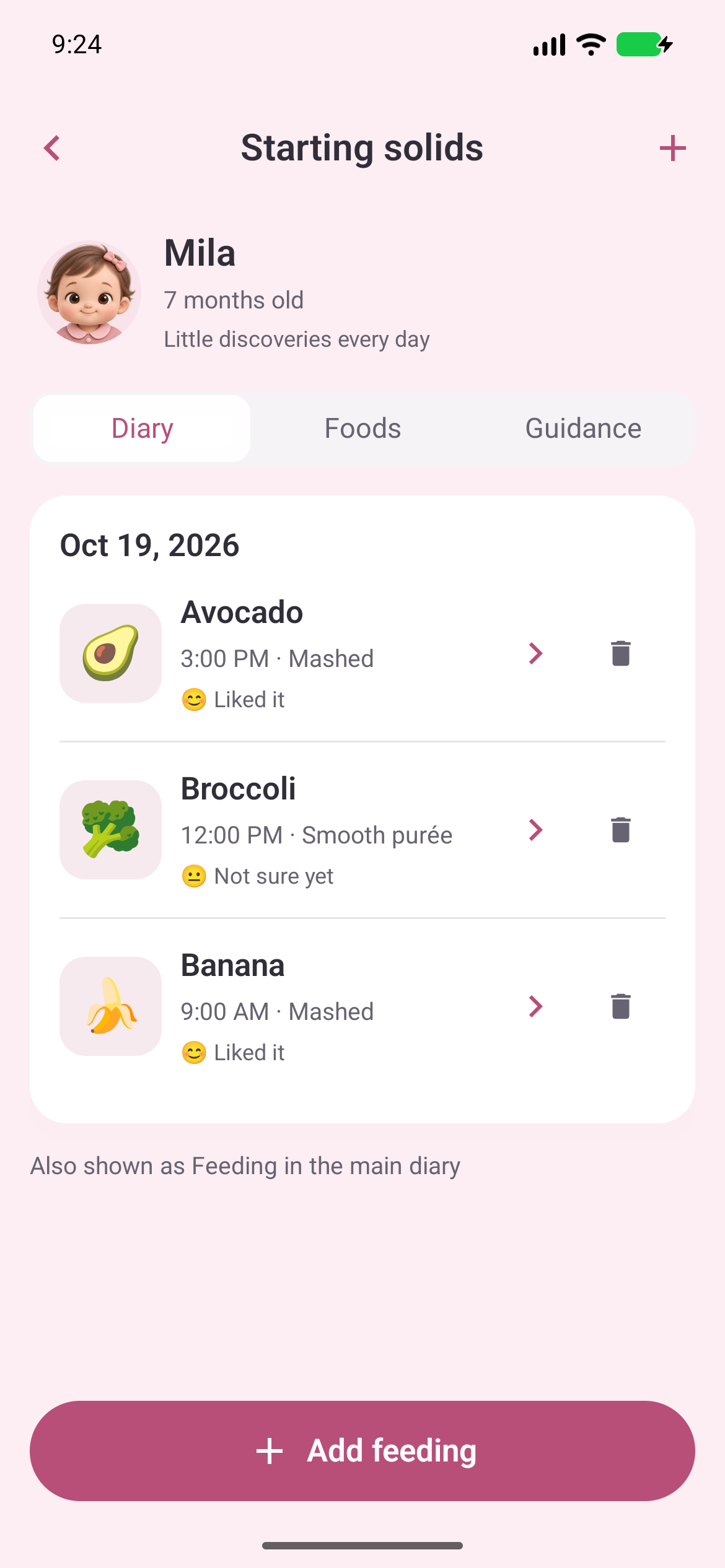
First tastes, in one place
Each meal in the starting-solids diary has its own entry with a date, time, texture and response.
- A history grouped by day, rather than an undated list.
- The food name and texture offered.
- A response and access to the entry’s details.
An app screen with sample data. These entries are not a recommended menu.
Open the full-size screen ↗Describe what you saw before interpreting it
“Opened her mouth for more, then turned away” is clearer than “ate well”. “At 12:35 I noticed red patches around the mouth” says more than “pumpkin allergy”. Record the time and observation; a clinician needs to assess the cause. “Liked it” describes an impression of the meal, not confirmation that a food is safe for your child.
An example of one diary entry
A fictional example for 7-month-old Mila, not a menu, suggested portion or schedule for introducing foods.
- 017 November 2026, 12:10 — pumpkin offered.
- 02Smooth purée; ingredients: pumpkin and water.
- 03Showed interest, then turned away. Note: “Tried at home, without rushing”.
Allergens: a record is not a diagnosis
NHS recommends introducing potential allergens individually. Seek medical advice beforehand if your baby has a known allergy or eczema.
Note the food, ingredients and timing of anything you noticed. A “possible reaction” label is information to discuss, not a confirmed allergy. NHS: food allergies in babies
Get help first for worrying symptoms
For breathing difficulty, sudden tongue or throat swelling, or unusual floppiness, seek local emergency help immediately. Do not delay to complete the diary. NHS: signs of anaphylaxis
Put the phone aside during the meal
Keep your baby safely seated upright with an adult present. Follow their cues and do not pressure them to eat.
Add your note afterwards. If you cannot remember the exact time, say in the note that it is approximate. A useful history can have gaps. NHS: helping your baby enjoy new foods
Keep the diary in SweetWonder
Open Starting Solids for the relevant baby and choose to add a meal. Enter the food and time, select a group, texture and response, then put important details in the note.
- Diary shows meals by date and time.
- Foods lets you look back at foods already recorded.
- Starting-solids entries also appear as Feeding in the baby’s main diary.
Bring specific questions to your child’s clinician
Before an appointment, find the entries you want to discuss. Explain what was offered, when and exactly what you observed. If someone else fed your baby, ask them to add their details. A few clear notes are more useful than a conclusion from memory; make feeding decisions with your child’s healthcare professional.
After the next meal, record the food, time and one specific observation. An entry only needs to help you remember what happened.
Keep the story of their first tastes
Download SweetWonder for iPhone or Android and keep foods, dates and your observations together in your baby’s diary.
All articles
SweetWonder helps you keep records and follow everyday routines. It is not a medical device and does not make diagnoses. If you are concerned about yourself or your baby, contact a healthcare professional.